
Motivation is that surge of energy that makes you sign up for a gym membership after stumbling upon an inspiring video on Instagram. It's a powerful engine, that's true, but it's fickle since it depends on our mood, our level of fatigue, and the circumstances.
But why don't we hold on? How many times does the flame go out shortly after being lit? That's the point of the concept of discipline: the latter, without being a constraint, can become a real engine that will take over to make us move forward, especially when the desire is no longer there.
In today's fast-paced world where everything is moving at 100 miles an hour, discipline is essential when you want to implement changes—I'll explain everything here.
Motivation vs Discipline: How Does It Work?
Motivation is that spark of feeling that makes us want to change everything. It’s the enthusiasm of new beginnings, the energy that pushes us to start a new project or a new habit.
Discipline, on the other hand, has nothing to do with desire. It’s the conscious decision to prepare your meals for the week on a Sunday evening, even when you’re exhausted and all you want to do is flop onto the couch and scroll through Instagram news. It’s a structure, a ritual you put in place so it works, whether you’re in the mood or not. It’s a framework you build so you no longer have to ask yourself the question—you just do it, that’s all.
Motivation is purely emotional: it comes from inspiration, a desire, or a goal that makes us dream. It can be very powerful, but it is quite unpredictable. From one day to the next, we may swing between motivation that gives us wings and motivation that is down in the dumps. Depending on our fatigue, our schedule, and unexpected events, motivation is constantly undermined in our daily lives.
- Motivation: The initial drive, quick and instinctive. A part of the blog post text: Motivation vs discipline: why discipline wins for establishing sustainable habits
- Discipline: it's a bit the system that creates reliable reflexes in the long term. A part of the blog post text: Motivation vs discipline: why discipline wins for establishing sustainable habits
- The difference: One initiates the action, the other makes it last. A part of the blog post text: Motivation vs discipline: why discipline wins for establishing sustainable habits
Discipline, on the contrary, is behavioral. It is rooted in concrete, repeated, and planned actions until they become automatic.
For us, this distinction is crucial. Between the stress of daily life, fatigue, emotional cravings...: our motivation is constantly challenged. That’s where discipline makes the difference.
| Criterion | Motivation | Discipline |
|---|---|---|
| Nature | Emotional, volatile | Behavioral, constructed |
| Reliability | Variable, erratic | Constant, predictable |
| Mood Dependency | Total | Weaker |
| Long-term impact | Activity spikes with no tomorrow | Steady and cumulative progress |
Setting up simple small routines significantly lightens our mental load. No need to wonder if we
The numbers speak for themselves: 60% of people don’t keep their resolutions after 6 months.
Emotion is not enough: to turn an intention into reality, it must be supported by a framework adapted to our constraints, to our daily life, and that is supportive.
The scientific basis behind all this
Every small routine you put in place creates new connections in your brain. It's not magic, it's neuroplasticity.
Studies show that it takes on average 66 days for a new habit to become automatic. Discipline is therefore not an innate character trait, but a skill that is built, step by step.
Comparative analysis between motivation and discipline
Source and reliability
The first major difference is their origin. Motivation arises from an emotion, a feeling. It is therefore reactive. Discipline, on the other hand, is the fruit of an intention, of a commitment. It is proactive.
This opposing nature explains why their reliability is so different. Relying solely on motivation for a long-term goal is like hoping to cross the ocean while waiting for the wind to always blow in the right direction.
Discipline is choosing your destination and building your own oars to get there, instead of waiting for the wind of motivation to blow in the right direction.
Discipline, on the other hand, is constant. It's the repeated action that creates its own momentum, day after day, whether inspiration is there or not. It's what keeps you moving forward long after motivation has let you down.
Long-term impact
Over time, the impact of these two approaches is radically different. Motivation generates intense bursts of activity, but they are very short-lived. It’s the famous "New Year's resolution effect": a rocket start that fizzles out in a few weeks.
Discipline, on the other hand, produces steady and cumulative progress. Every small action, even if it seems insignificant at the moment, adds to the others to create deep and truly lasting results.
Let's take a concrete example: weight loss.
- Approach through motivation: we are motivated by the idea of the summer body this summer (rightly or wrongly!). We start a diet and exercise every day. After two weeks, an unexpected work issue, a drop in morale, a problem with the kids: we break our routine and motivation collapses. It is then very difficult to get back on track. A part of the blog post text: Motivation vs discipline: why discipline wins for establishing sustainable habits
- Approach through discipline: we create a framework: we write down our changes, when, how, why, where... We ensure they align with our deep desires, and then we start. From there, we decide not to question ourselves anymore: whether it's raining or we're tired, we stick to it. Slowly, these actions become automatic. That's the idea behind the Niki program, by the way: we don't have to think about what we're implementing; we follow a program that helps us turn an objective into integrated habits. A part of the blog post text: Motivation vs discipline: why discipline wins for establishing sustainable habits
The science behind discipline: how it really works in our bodies?
Far from being a battle of willpower, discipline is the intelligent use of science to bring about lasting change.
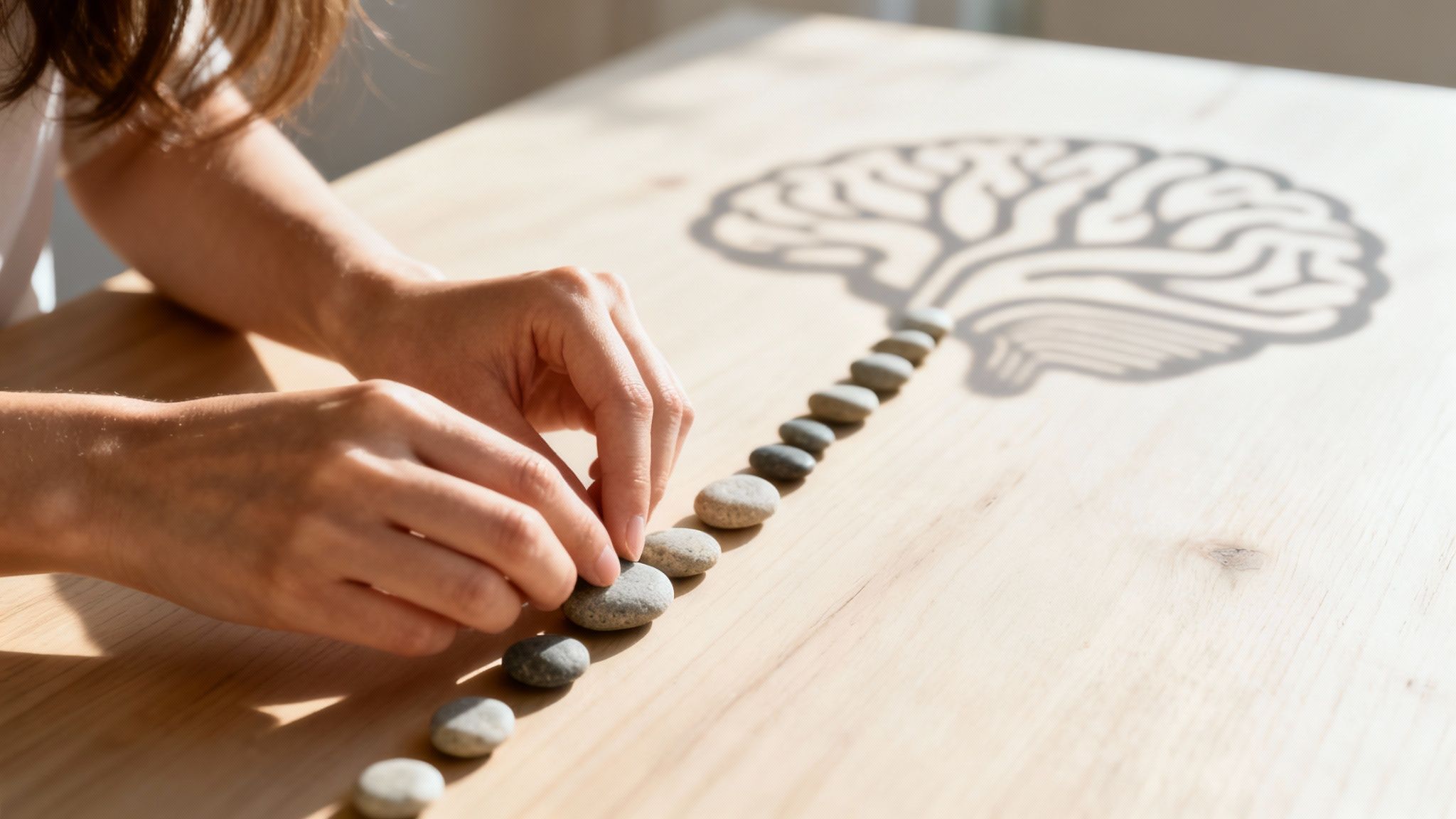
The key word is neuroplasticity. Imagine your brain isn’t a chiseled stone, but rather clay that shapes itself with every thought and action. Each time you repeat a gesture—even a small one—you strengthen the neural pathways that correspond to that behavior.
At first, it requires a conscious effort, that's for sure. But the more you repeat, the more your brain transforms that little dirt path into a real highway. The action then becomes almost automatic; it no longer demands your willpower. And that, that changes everything: it frees up your mental energy! There’s no more doubt—you can focus on something else.
Transform your well-being through the science of habits
Far from being a punishment, discipline is in fact the gentlest method for harnessing this neuroplasticity. A study published in The European Journal of Social Psychology found that it takes an average of 66 days for a new habit to become established.
Discipline is simply about holding on during those few weeks until the brain turns it into a habit. I experienced this myself when I changed my sugar consumption, for example. I used to eat entire packets of cookies, and when I tried to reduce my intake and switch to different types of sugar, it was quite a challenge. Of course, there are ups and downs, but it’s incredibly rewarding to see how it works—today, I no longer eat any processed sugary products, and it doesn’t take any effort at all. My taste buds have changed, and my brain has gotten used to not even considering those products as an option.
Discipline is the freedom to no longer have to negotiate with yourself every day to do what’s good for you. You decide, you do it, it’s done: period.
The big difference is right there. Motivation makes you buy running shoes; discipline makes you put them on every morning, rain or shine. By understanding and applying these principles, you stop fighting against yourself and start building solid well-being that lasts.
Discipline hurts less than regret
OK, but then how do you turn motivation into discipline?
We'll use motivation to light the fire, and create a system around it to keep it burning.
It's not about forcing yourself brutally, but about building a clear, concrete, and accessible framework. Here's a five-step plan to get there, all with ease.

Step 1: Finding Your True "Why"
The first step is to dig deep. A 'why' that goes beyond the surface-level goal. 'I want to lose weight' is a motivation that quickly crumbles. 'I want to have the energy to play with my grandchildren without getting out of breath,' 'I want to feel free in my clothes, not constantly calculating what hides what,' or even 'I want to feel strong, stable, capable, and not fragile.' These are real motivations.
This emotional engine, it's your anchor for the days when you're not feeling it. It gives real meaning to our efforts.
Discipline without a clear 'why' is drudgery. With a real 'why', it becomes an act of love toward oneself.
Step 2: Choose Your Battles
We all know that being too ambitious doesn’t work. It’s the best way to get discouraged! I remember Fabien Olicard saying that he started with changes so small that they seemed insignificant.
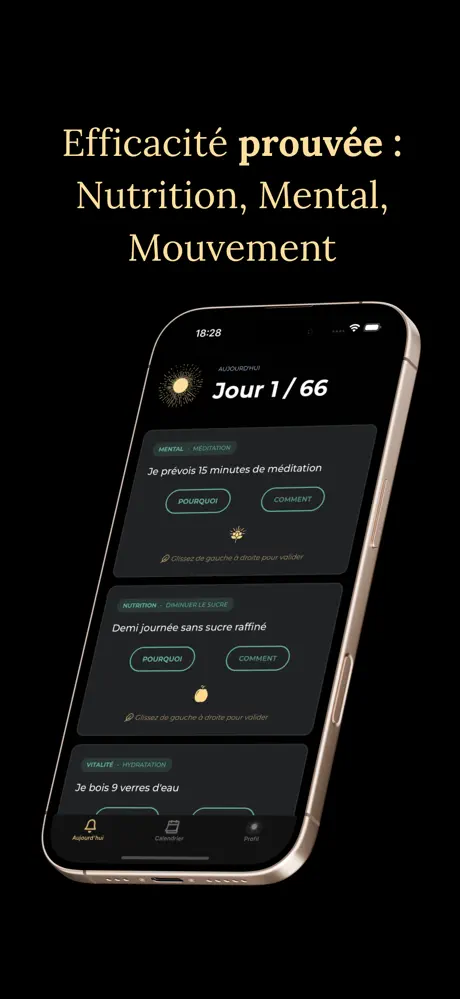
It is on this principle that Niki Coach is built. Daily challenges are small, targeted actions that are easy to integrate and gradually build a solid foundation of habits without ever overwhelming you.
Step 3: Clearly Formulating Your Changes
To begin with, the simple wording of a resolution will impact its success or failure. If the resolution is worded positively and concretely, it is more likely to succeed. For example, "I will run 5 times a week for 30 minutes" is more likely to succeed than "I will quit smoking," which is less structured, less concrete, and more vague.
Step 4: Create Triggers
A trigger is a signal that launches your habit automatically, without even thinking about it. It's the secret to creating automatic behaviors. The trick is to graft your new micro-habit onto an existing routine.
For example: « After brushing my teeth in the morning (existing trigger), I will fill my water bottle for the day (=new habit). » This technique, called "habit stacking," uses a familiar action as a launchpad.
A visual reminder on your fridge can also serve this purpose. The goal is to eliminate any friction at the start.
Step 5: Track progress visibly
Tracking is what fuels commitment. The simple act of checking a box on a calendar or validating a challenge in an app like Niki Coach provides an immediate sense of satisfaction. It's rewarding, you feel like you're making progress, and it feels good.
This visual feedback proves that your small daily efforts add up and pay off. It strengthens your confidence in your ability to stay the course and reinforces the neural pathways of your new habit. The logbook is, by the way, a great tool for this—you can learn more about mental journaling in our guide.
Step 6: Celebrate every small victory
And finally, savor it. It is essential to celebrate every success, even the smallest one. In this case, I'm not the best at it, so I really need to write it down or plan a little celebration in my agenda, otherwise it slips through the cracks. When you've done your daily micro-habit, take a few minutes to feel proud. This recognition activates the reward circuit in your brain and releases dopamine.
Your brain will then associate this habit with a pleasant feeling, which will make you want to do it again. The celebration doesn’t need to be grand; a simple "Well done, I did it!" whispered to yourself is enough. It’s this loop that cements discipline and turns it into a positive reflex rather than a constant struggle.
Niki Coach: How the app uses this approach to help you
This is really what I wanted to build with Niki: a kind and well-structured tool to guide changes. Niki Coach isn’t just another app to motivate you; there’s a complex algorithm behind it that calculates the activities you need based on YOUR goals. That way, a list of micro-changes is put in place without that mental burden. You can always adjust the activities so they fit 100% with your needs and desires.
Build habits with micro-actions
The heart of the Niki Coach method consists of daily small challenges: nutrition, mindset, movement, and vitality. It’s not about achieving feats, but about intentionally repeating very small, simple actions. It is this repetition that is the key to forging new habits and lightening your mental load.
A kind discipline isn't about forcing yourself. It's about creating a system that makes good choices easier to make.
A discipline that makes sense
In Niki Coach, each activity is explained to you: how it will help you achieve your goal? And how to implement it?
Your daily life, your constraints, your desires, and your goals: all of this shapes the program, then adjusts where necessary. Because for a change to work, it is essential that it is filled with meaning—the meaning you give it, you.
To learn more about the tool, feel free to discover the Niki Coach approach here.
Routine and flexibility: the allies of consistency
Discipline requires structure. Whether through a series of rituals (sticky notes, reminders, etc.) or by validating in an app, these small details will strengthen your commitment and activate the brain's reward system every time you validate an action, no matter how small.
But flexibility is essential to last over time. The unexpected is part of life, and we must never let guilt creep in when we have to cancel our to-do list: it’s not just useless, it’s harmful—it drags us down.
You can't do what's planned for today? That's okay, let's move forward, let's move on to the next thing.
In Niki, you can report your small challenges or take a break without feeling guilty. This flexibility is crucial to stay on track, even on days when things aren't going well, and to break the cycle of giving up.
Your questions about motivation and discipline
I answer the questions that come up most often to help you see things more clearly.
I hate the idea of discipline: I associate it with an obligation
It's a common misconception I often hear, but one that deserves to be dismantled. Kind discipline is not a punishment; on the contrary, it will be a wonderful tool to free your mind. You should see it as a crutch, a cane that helps you walk again after a fall. One day you won't need the cane anymore, but at first it is indispensable.
A well-thought-out discipline doesn’t lock you in; it sets you free. It automates the actions that make you feel good, so your mental energy is available for what truly matters to you.
Instead of asking yourself, "What am I going to eat tonight?" or "When will I find the time to move?", you follow a simple framework that guides you. This structure brings serenity and reduces stress, because it makes your daily life more predictable. It's the complete opposite of rigidity!
I always start full of motivation, but I give up after a few weeks. How can I break out of this cycle?
We’ve all experienced this pattern. The first thing to do is not to feel guilty so you can move forward. Here are 3 concrete tips to help you succeed in your changes:
- Break down your goals into small pieces: Your big ambitions are transformed into daily micro-challenges, so simple that they are achievable even on a day when you're not feeling your best. This avoids that overwhelming feeling that makes you want to give up everything. A part of the blog post text: Motivation vs discipline: why discipline wins for establishing sustainable habits
- Create routines: set up a clear and concrete routine, accessible, in your schedule. Project yourself into this routine, visualize it: if you're not comfortable with it, you need to refine it. A part of the blog post text: Motivation vs discipline: why discipline wins for establishing sustainable habits
- Find support: track your progress, surround yourself with friends who are making these changes too, celebrate your victories... All these little things will help you stay on course in the tougher days. A part of the blog post text: Motivation vs discipline: why discipline wins for establishing sustainable habits
If you have any questions or remarks, write to me at marine.ambroselli@icloud.com or on Instagram @Marine_ambroselli