


For a long time, it was believed that painful periods, also known as dysmenorrhea, were an inevitability. This idea is wrong and downplays real suffering that impacts the daily lives of half the population.
Is it really "normal" to be in pain? A little discomfort, yes. Our cycle and hormonal changes do cause minor inconveniences—that's normal. But debilitating pain that confines you to bed is neither inevitable nor normal.
No, pain is not a norm
If a certain discomfort is common in the general population, very painful periods (dysmenorrhea) are not 'normal' in the sense that they warrant investigation (endometriosis, adenomyosis, etc.) and active management.
Alongside this situation, we now know thanks to numerous scientific studies that our lifestyle is a powerful lever to relieve painful periods.
This approach is based on a concrete understanding of how our body works:
- Manage inflammation: pain is directly linked to the production of inflammatory molecules, prostaglandins. There are strategies to modulate their production. A part of the blog post text: How to relieve painful periods: natural solutions validated by science
- Influence symptoms (probably via hormonal and neuroendocrine pathways): Stress, sleep, physical activity, and diet have a direct and measurable impact on our hormonal balance (click on the links to see the scientific studies). A part of the blog post text: How to relieve painful periods: natural solutions validated by science
- Relax: Targeted relaxation and movement techniques have been shown to be effective in relaxing the uterus and relieving cramps. This meta-analysis is particularly interesting to review for more information. A part of the blog post text: How to relieve painful periods: natural solutions validated by science
A real phenomenon and concrete consequences
In France, 79% of women suffer or have suffered from period pain or dysmenorrhea. For a large part of them (42%), the pain is described as intense. 60% of them have never consulted a healthcare professional for this pain, illustrating the normalization of pain since we are young girls. If you want to delve deeper into the topic, you can consult the barometer details here.
Recognizing this reality is the first step to regaining control.
This article will guide you with concrete and validated strategies to soothe your pain, from the quick tip that saves you in the moment to the habits to build for the long term. Together, we'll see how targeted adjustments, at the heart of what I offer with Niki Coach, can truly change your relationship with your cycle and help you live your periods much more serenely.
Instantly ease the pain with simple gestures
Some natural methods have proven efficacy for soothing a crisis. Consider them your toolkit for first aid to relieve cramps, and above all, choose those that seem most suitable for you.
The Power of Heat
Heat is undoubtedly the most well-known technique, and for good reason. A hot water bottle or heating pad on the lower abdomen works wonders. On one hand, heat relaxes the uterus muscles, which reduces the intensity of contractions. On the other, it activates thermal receptors that help "blur" the pain signals sent to the brain.
A study published in Obstetrics & Gynecology showed that applying mild local heat was just as effective as ibuprofen for easing menstrual cramps! This is proof that simple and accessible solutions can have a big impact.
Here is a table that offers you different methods for immediate relief, which ones seem most suitable in your case to you?
Comparison of quick solutions for menstrual cramps
| Method | Principle of Action | Speed of Effect | Practical Advice |
|---|---|---|---|
| Hot Water Bottle/Patch or Heating Pad | Muscle relaxation, pain signal blocking | 5-10 minutes | Apply to the lower abdomen or lower back, never directly on the skin. |
| Relaxation Postures | Reduced pressure on the uterus and abdomen | Immediate | Focus on slow, deep breathing to enhance the effect. |
| Abdominal massage with essential oils | Improvement of circulation, relaxation of uterine muscles, antispasmodic and relaxing action. See the meta-analysis here. | 15-20 minutes | Always dilute essential oils in a vegetable oil and test on a small area of skin first. Check for contraindications beforehand. |
| Ginger | Well-documented pain-relieving action, see the study here. | About 30 minutes |
- In powder form (1 tsp 4 times/day)
- In herbal tea (3g of grated rhizome per cup)
- In 250 mg capsules, 4 times/day |
We are all different; we need to test and see what works best for ourselves.
The movement
When cramps set in, our first instinct is to curl up and curse the entire world: moving seems like the worst idea in the world. Yet, as surprising as it may seem, movement is one of our most precious allies.
By moving, your body releases endorphins, those famous molecules that act as natural painkillers. It's the same mechanism that brings about that feeling of well-being after a workout, even a gentle one.
Additionally, physical activity improves blood circulation, including in the pelvic area. Better blood flow means more oxygen for the uterine muscles and better evacuation of prostaglandins, those little troublemakers responsible for painful contractions.
Adopt postures that provide relief
Here are a few postures to try:
- Fetal position: Lying on your side, knees drawn up to your chest. This posture relaxes the abdominal muscles and relieves tension in the lower back. A part of the blog post text: How to relieve painful periods: natural solutions validated by science
- Knees to chest: Lie on your back and gently bring your knees toward your chest, hugging them. Stay in this position while breathing deeply. A part of the blog post text: How to relieve painful periods: natural solutions validated by science
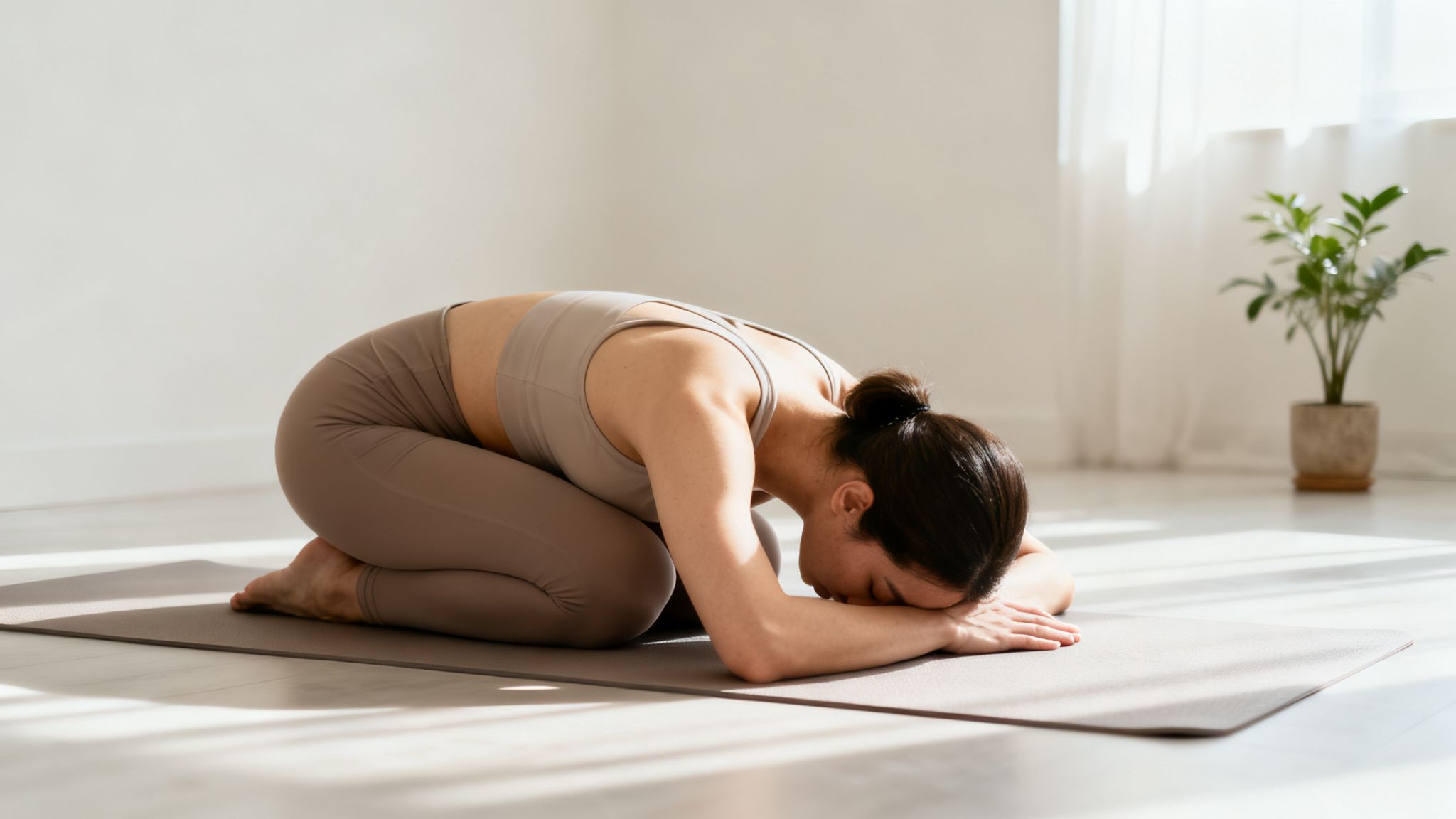
- Child's Pose (Balasana): A classic yoga pose. Kneel down, sit on your heels, then lean forward to place your forehead on the ground, with your arms extended in front of you or along your body. A part of the blog post text: How to relieve painful periods: natural solutions validated by science
The goal is total relaxation. Find the posture that feels good to you and focus on slow belly breathing to maximize the calming effect.
Abdominal massage with essential oils
Gently massaging the lower abdomen is another validated technique for calming cramps. The movement helps restart blood circulation in the area and relax contracted muscles. Essential oils with analgesic and relaxing properties such as true lavender, rosemary, clary sage, ginger, etc., are added. For an effective massage, dilute 2 drops of essential oil in a tablespoon of vegetable oil (sweet almond, jojoba, etc.). Gently massage the lower part of your abdomen in a clockwise direction, without pressing too hard, until the oil is absorbed.
Warning: essential oils are potent and require precautions. Check the contraindications, and if in doubt, always seek the advice of a healthcare professional.
In the long term: the attack plan
Pillars of a Calmer Cycle
There's no need to revolutionize everything overnight. Little by little, you'll transform your habits and you'll quickly see the differences.
- Truly restorative sleep: Sleep is one of the most powerful tools for regulating dysmenorrhea and PMS. It is at night that your body regulates its hormones and calms inflammation. Poor sleep opens the door to cortisol (the stress hormone) and hormonal imbalances. A part of the blog post text: How to relieve painful periods: natural solutions validated by science
- Smart hydration: Drinking enough water is the foundation to avoid water retention, one of the most common premenstrual symptoms that causes swelling. Hydration will also help you eliminate toxins and prevent muscle cramps, including those of the uterus. A part of the blog post text: How to relieve painful periods: natural solutions validated by science
- An anti-inflammatory diet: Focusing on whole foods rich in fiber, protein, healthy fats, and antioxidants helps stabilize blood sugar and reduce inflammation. Fewer sugar spikes, fewer cravings, and often less pain. Your plate can become a true hormonal ally. A part of the blog post text: How to relieve painful periods: natural solutions validated by science
- Adapted physical exercise: Moving regularly has a direct impact on menstrual pain. It improves circulation, reduces stress, and stimulates the production of endorphins, our natural painkillers. No need for intense workouts: walking, yoga, gentle strengthening, mobility can already make a real difference. The key is consistency and listening to your energy. A part of the blog post text: How to relieve painful periods: natural solutions validated by science
- **Targeted "crutches": plants, dietary supplements. Sometimes, a little boost is needed to fill certain deficiencies, support our cycle and our overall metabolism. A part of the blog post text: How to relieve painful periods: natural solutions validated by science
The key to success is consistency: it's the accumulation of good habits that makes all the difference. Without frustration. To achieve this, keep in mind the 80/20 rule: 80% of the time, you follow these recommendations, and 20% of the time, you allow yourself some flexibility.
Patience, our best ally
This isn’t a magic pill. The long-term approach will take effect after two to three cycles, and that’s when you’ll start feeling the benefits of your new routine.
It's an investment in yourself. Every small step, like the ones proposed in Niki Coach challenges, adds up to create deep and, above all, lasting change.
Anti-inflammatory diet
What we put on our plate may seem trivial, but it is one of the most powerful levers to ease painful periods in the long term. Far from being a "miracle" approach, anti-inflammatory nutrition relies on mechanisms well validated by science.
The idea isn't to deprive yourself, but to understand what's happening in our bodies. Menstrual cramps are mainly caused by molecules called prostaglandins. Produced in large quantities just before and during menstruation, these are what trigger uterine contractions. The higher the level of pro-inflammatory prostaglandins, the stronger—and more painful—the contractions become.
Fortunately, our diet can directly influence the production of these molecules. The goal is therefore to promote molecules that soothe and to limit those that add fuel to the fire.

The Nutrients That Support Your Cycle
To calm things down, certain nutrients are true superstars. Incorporating them regularly into your meals, and not just during your period, can really make a difference.
- Omega-3s: These are the champions of anti-inflammatory action. They act somewhat like precursors for producing "calming" prostaglandins. A meta-analysis you can check out here has also confirmed that omega-3 supplementation significantly reduces the intensity of menstrual pain. You can find them in fatty fish (sardines, mackerel), flaxseeds, chia seeds, walnuts, and runny egg yolks. To dive deeper into the topic, take a look at our guide on how to incorporate more omega-3s into your diet. A part of the blog post text: How to relieve painful periods: natural solutions validated by science
- Magnesium: A true natural muscle relaxant. It helps to relax the muscles of the uterus and calm spasms. Here is this study that delves into the topic. It's no coincidence that a magnesium deficiency is often linked to more severe cramps. To address this, include dark chocolate (over 70% cocoa), spinach, almonds, sesame seeds, and pumpkin seeds. A part of the blog post text: How to relieve painful periods: natural solutions validated by science
- Antioxidants: They are found in brightly colored fruits and vegetables. They combat oxidative stress, a process that can amplify inflammation, through cytokines that act upstream of prostaglandins. Here is a study to learn more. Think of red fruits, blueberries, beets, and leafy green vegetables. A part of the blog post text: How to relieve painful periods: natural solutions validated by science
- Zinc: It plays a key role in modulating inflammation and regulating prostaglandins. It can be found in oysters, pumpkin seeds, legumes, and nuts. A part of the blog post text: How to relieve painful periods: natural solutions validated by science
- Vitamin B1: It is one of the most well-studied nutrients in primary dysmenorrhea. It contributes to the proper functioning of the nervous system and muscle contraction. Studies have shown that vitamin B1 supplementation can significantly reduce pain (to the same level as ibuprofen!) and sometimes even make it disappear after a few cycles. It can be found in whole grains, seeds, and legumes. Although the studies were conducted with supplementation, adopting a diet rich in B1 will support your hormonal balance. A part of the blog post text: How to relieve painful periods: natural solutions validated by science
Foods to moderate for less pain
Just as certain foods can help us, others can unfortunately worsen the situation. It's not about banning them for life, but being aware of them and limiting their consumption, especially during the week leading up to your period.
Here are the main ones:
- Refined sugars: They cause insulin spikes that promote inflammation. They are found in sodas, candies, industrial pastries, white bread, and many ultra-processed foods. A part of the blog post text: How to relieve painful periods: natural solutions validated by science
- Trans and saturated fats: Present in fried foods, processed meals, and excessive red meat, they encourage the production of pro-inflammatory prostaglandins. A part of the blog post text: How to relieve painful periods: natural solutions validated by science
- Excess alcohol and caffeine: They can disrupt hormonal balance, increase water retention, and cause tension. A part of the blog post text: How to relieve painful periods: natural solutions validated by science
- Beware of intolerances and allergies: lactose, gluten, poor digestion, this will increase inflammation. It is therefore interesting to identify any intolerances you may have and adjust your diet accordingly. A part of the blog post text: How to relieve painful periods: natural solutions validated by science
The approach isn't about following a strict and frustrating diet. It's more about adopting a philosophy where beneficial foods naturally take up more space, and changing your habits in the long term. The good news is that over time, there's really no effort required—we're naturally drawn to what's good for us. This is exactly the spirit of the nutrition challenges in the Niki Coach app: guiding you toward healthier choices, step by step and without pressure.
An example of an anti-inflammatory diet day:
To make this more concrete, here's what a day of meals designed to soothe your cycle could look like:
| Meal | Suggestions | Benefits |
|---|---|---|
| Breakfast | An oatmeal porridge with chia seeds, blueberries, and almonds. Here's an idea for a recipe here. | Fibers, omega-3s, and antioxidants to start the day right. |
| Lunch | Small fatty fish (sardines or mackerel) with a large portion of cooked spinach, quinoa. | Full of omega-3, magnesium, and protein to keep you full. |
| Snack | A fruit, a handful of nuts, and one or two squares of 75% dark chocolate. | Magnesium and healthy fats to prevent cravings and calm nerves. |
| Dinner | A red lentil soup with turmeric and steamed green vegetables. | Plant-based proteins, fiber, and turmeric, a powerful anti-inflammatory. |
Changing your eating habits takes a little time. But the benefits on the intensity of your pain are very real and proven. It's a long-term strategy that gives you back the power over your well-being. And once you've found your ideal diet, it's for life!
Movement, your best natural pain relief
A recent meta-analysis shows that all moderate exercises reduce menstrual pain after 8 weeks: muscle relaxation, yoga, aerobic exercise (brisk walking, gentle cycling, etc.). Unlike immediate postures (fetal position, Balasana), this is a preventive approach to integrate 1-2 times per week for a cumulative effect over time.

Incorporating movement into your routine is a powerful strategy for better living through your cycle.
The impact of stress on pain intensity
It is often said that stress worsens painful periods. It's not just an impression; it's a very real physiological mechanism.
When we are stressed, our body starts to produce cortisol, the famous stress hormone. A cortisol level that remains high over time has a direct impact on our balance: it increases general inflammation throughout the body.
This chronic inflammation adds to the perfectly normal inflammation that occurs during menstruation. It's like adding fuel to the fire. As a result, the production of pro-inflammatory prostaglandins spirals out of control, uterine contractions become stronger, and, inevitably, the cramps become more painful. This sets off a vicious cycle: pain generates stress, which in turn amplifies the pain.
Break the vicious cycle with breathing
Fortunately, there are very concrete tools to take back control. One of the most powerful techniques, scientifically validated, is cardiac coherence. It’s not just about "breathing well". It’s a precise exercise that involves adopting a rhythm of six breaths per minute: five seconds of inhalation, followed by five seconds of exhalation.
This simple practice has a direct and almost immediate effect on our nervous system. It activates the parasympathetic system, our internal 'brake,' which helps calm the 'fight or flight' response typical of stress. A few minutes of coherent breathing are enough to lower cortisol levels and reduce blood pressure.
By calming your nervous system, you send your body the signal that everything is fine. This helps to reduce the overall level of inflammation and, consequently, to lessen the intensity of cramps.
This is a genuine skill that develops with practice. In the Niki Coach app, you are guided with a dedicated tool. There are also plenty of videos on YouTube or other apps like Petit Bambou to help you implement it.
Taming pain with mindfulness
Beyond breathing, mindfulness is another very interesting approach to better cope with pain. The goal is not to ignore it, but to observe it without judgment and to detach oneself a little from the anxiety it provokes.
The idea is to focus on your bodily sensations, even if they are unpleasant, with an attitude of curiosity rather than panic. This practice helps create a distance between the pure physical sensation and the emotional suffering that often comes with it.
A few simple tips to get started:
- Body scan: Lying comfortably, bring your attention to each part of your body, from your toes to the top of your head, simply noticing the sensations without trying to change them. There are plenty of videos online to guide you. A part of the blog post text: How to relieve painful periods: natural solutions validated by science
- Meditation on breathing: Sit down, focus on the ebb and flow of your breath. Whenever your mind wanders, gently bring your attention back to this anchor. A part of the blog post text: How to relieve painful periods: natural solutions validated by science
These techniques consist of a genuine training of your mind. By practicing them regularly, for example with the guided challenges in our application, you learn to better regulate your reactions to stress and pain.
And dietary supplements?
Sometimes, especially at the beginning of lifestyle changes, it can be interesting to supplement, particularly with certain essential molecules.
Magnesium is the natural muscle relaxant par excellence. It has long been known that it has a huge impact on menstrual pain.
The vitamin B1, for its part, is essential for producing our "happiness hormones" like serotonin, which modulate our perception of pain. It also plays a role in the production of good prostaglandins, the ones that are anti-inflammatory.
Zinc: if you can't incorporate it into your diet, supplementation may be worth considering.
Vitamin D: a recent meta-analysis shows that vitamin D significantly reduces dysmenorrhea, yet it is not something easily found in our diet.
Chasteberry: chasteberry is a plant that acts on our hormones (progesterone) and has proven to have very interesting results, as also cited by Vidal here. Caution, this plant may have drug interactions.
Valerian: another well-researched plant that has proven effective, valerian is easier to incorporate than chasteberry as it acts on the nervous system (GABA) rather than the hormonal system, and has fewer interactions / contraindications.
Warning, before you start, always ask for the advice of a health professional. Dietary supplements are not harmless. It's essential to be sure that it is suitable for you and to avoid any incorrect dosage.
The questions you have about painful periods
How normal is it to be in pain?
Discomfort is normal. Being bedridden prevents us from doing our daily activities, but that is not "normal." And it's not a foregone conclusion. It's often a sign that something is happening inside: a hormonal imbalance, an overly inflammatory environment, or sometimes a condition like endometriosis.
The first reflex is to stop downplaying it. Talking to a doctor or gynecologist about these cramps is crucial to make a clear diagnosis and rule out a more serious cause. This is the first essential step to finding how to relieve your painful periods in a targeted way.
Do natural remedies really work?
Yes, and science confirms it more and more. Many natural solutions, long called "grandma's remedies," are now validated by rigorous studies. The hot water bottle, for instance, is not just a simple comfort: a study has shown its effectiveness comparable to that of ibuprofen in blocking pain signals!
Same goes for an anti-inflammatory diet or yoga, whose benefits in reducing cramps are well-documented. The real strength of the natural approach is that it targets the root cause. By improving your lifestyle, month after month, you can gradually reduce the intensity of pain in a lasting way.
Naturopathy, when well-practiced and based on science, is an incredibly powerful strategy. It does not replace medicine; it gives you the keys to regain control of your well-being.
How long will it take to see a difference?
It really depends on what you put in place. "SOS" solutions like warmth, a yoga position, or a soothing herbal tea can calm a crisis in just a few minutes.
For fundamental changes, such as an anti-inflammatory diet or stress management techniques, you may already feel an improvement as early as the next cycle. But for deep and lasting impact, it often takes 2 to 3 cycles. This is the time needed for your body to adapt and for new habits to fully reveal their potential. Consistency is truly the key. Think of the 80/20 rule: 80% of the time, follow these recommendations, and 20% of the time, allow yourself some flexibility! This way, you’ll avoid frustrations that are clearly counterproductive.
To go further, try the Niki program. The application offers you personalized daily challenges, based on science, to guide you step by step towards sustainable well-being.