

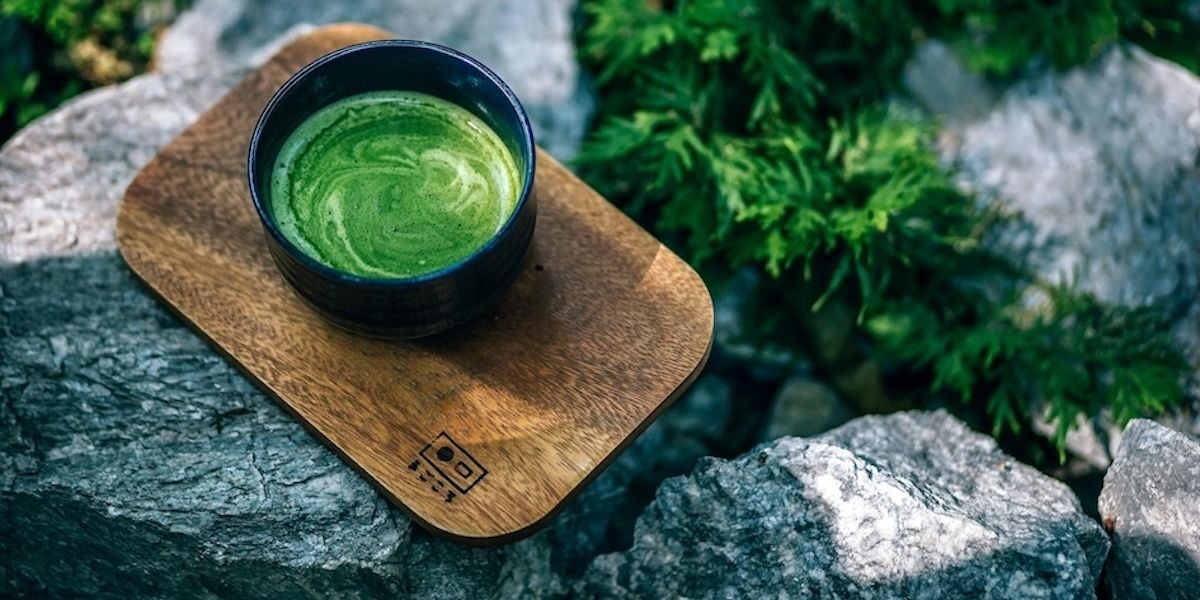
Matcha tea is a nutritional treasure. But it is also an expensive product, whose quality varies enormously: you can find it from €10 for 100g to €30 for 30g, which is almost a tenfold difference!
Here are some tips to figure it out without getting fooled
Traditionally, matcha is consumed during the tea ceremony in Japan, once reserved for privileged classes. It is an exceptional tea that meets specific criteria: shaded cultivation, a single annual harvest, and stone-mill grinding.
Today, with the growing popularity of matcha (drinks, pastries, cuisine), its production has been widely popularized, and many products are of mediocre quality. The tea then has nothing to do with traditional matcha anymore. The labels are not regulated at the moment, but one can hope that this will change, perhaps with some kind of AOC, who knows. In the meantime, I personally am disappointed 9 times out of 10 when I order a matcha at a café, to the point that I now only order it at home.
Here are the 9 foolproof criteria for finding a truly great matcha:
Niki Coach: Your Life Coach
66 days to take back power.
An application of personalized programs to become the best version of yourself
⭐ 4.9/5 - Over 2000 satisfied users
1. Color:
- the powder must be bright green. When the color leans slightly towards yellow, it's a bad sign. The very essence of matcha, with its chlorophyll, is a bright green.
2. Taste:
- a good matcha is not bitter, to the point that it can be enjoyed with water and not necessarily plant-based milk. Its flavor is described as umami.
3. The powder
- Must be fine, not coarse
4. The origin
- Matcha is Japanese; good matcha cannot come from China (at least not for now)
5. Packaging
- It must be in airtight bags or boxes
6. The composition
- Some powders already contain additives, including sugar. Check the composition in-store, or ask the server in cafés. If the powder is sweetened, that's a very bad sign: good matcha doesn't need sugar, unlike low-quality matcha which, to mask its bitterness, will require a sweetener. Good matcha is 100% tea. Nothing else!
7. Preparation
- In cafés, the server's expertise: the matcha must be prepared using a chasen, a small bamboo whisk, or a small electric whisk, in a matcha bowl. If that's not the case, it's a bad sign: it's unlikely that a café that doesn't bother to use the right tools will bother to buy high-quality matcha.
8. The store "
- Personally, I have never yet found quality matcha in non-specialized stores. Even in organic stores, the quality just isn’t there (at all). My advice: go explore small specialized shops. You’ll find enthusiasts there who will introduce you to authentic and often unique products.
9. The price
- A serious matcha costs around thirty euros